Sewer Line Installation Chicago, IL
Sewer line installation services in Chicago for new connections, replacements, and repairs.
Local Sewer Line Installation Expertise
In Chicago, sewer line installation addresses everything from new property connections to full system upgrades. Many Chicago homes built before 1970 rely on clay or cast iron pipes that crack, corrode, or fail under the city's freeze-thaw cycles and heavy rainfall. Professional installation ensures your system handles Chicago's demanding soil conditions and municipal codes.
How We Work
Our process moves from inspection to installation, ensuring every step protects your property and meets Chicago code.
Diagnose the Line
We start with a video camera inspection to see exactly what's underground. Clay pipes show cracks; cast iron reveals corrosion; roots appear as blockages. This footage tells us whether you need a full replacement or if installation for a new connection is the priority.
Chicago's permit office often requires inspection records before approving new installations. We document everything on video and in written reports, giving you clear proof of existing conditions and what must be done next.
Plan the Route
Installation routes matter in Chicago. We locate the city main connection, map tree locations, check property lines, and identify utilities before any digging begins. Frost lines run approximately 42 inches deep in Chicago, so we size depth and pipe material to handle local soil freeze-thaw stress.
We pull permits from the city and confirm all Chicago Department of Water Management requirements. No surprises, no rework.
What's Involved
Mark and Verify
We call 811 or Chicago's One Call service to mark gas, electric, and water lines. No digging starts without confirming every utility.
Install the Line
We dig to proper depth, lay Schedule 40 PVC or cast iron pipe per code, and connect to the city main. Every joint is sealed and tested for leaks.
Test and Inspect
The city inspector verifies depth, slope, and pipe integrity. We provide smoke tests or hydrostatic tests to confirm zero leaks.
Restore and Backfill
We compact the trench, restore your lawn, and repave or reseal as needed. The job is clean, not a half-finished excavation site.
You'll always know what's happening next—and when.
Our Services
Sewer work covers new installs, replacement, and specialized repairs—all with Chicago code compliance.
New Sewer Line Installation
Building an addition, finishing a basement, or adding a bathroom requires a new sewer connection to Chicago's municipal system. We size the line, route it properly, and ensure slope for gravity flow. No codes violations, no rework.
New installations on Chicago's North Shore neighborhoods like Evanston-adjacent areas or South Shore often pass through dense yards. We minimize disruption while meeting every permit requirement.
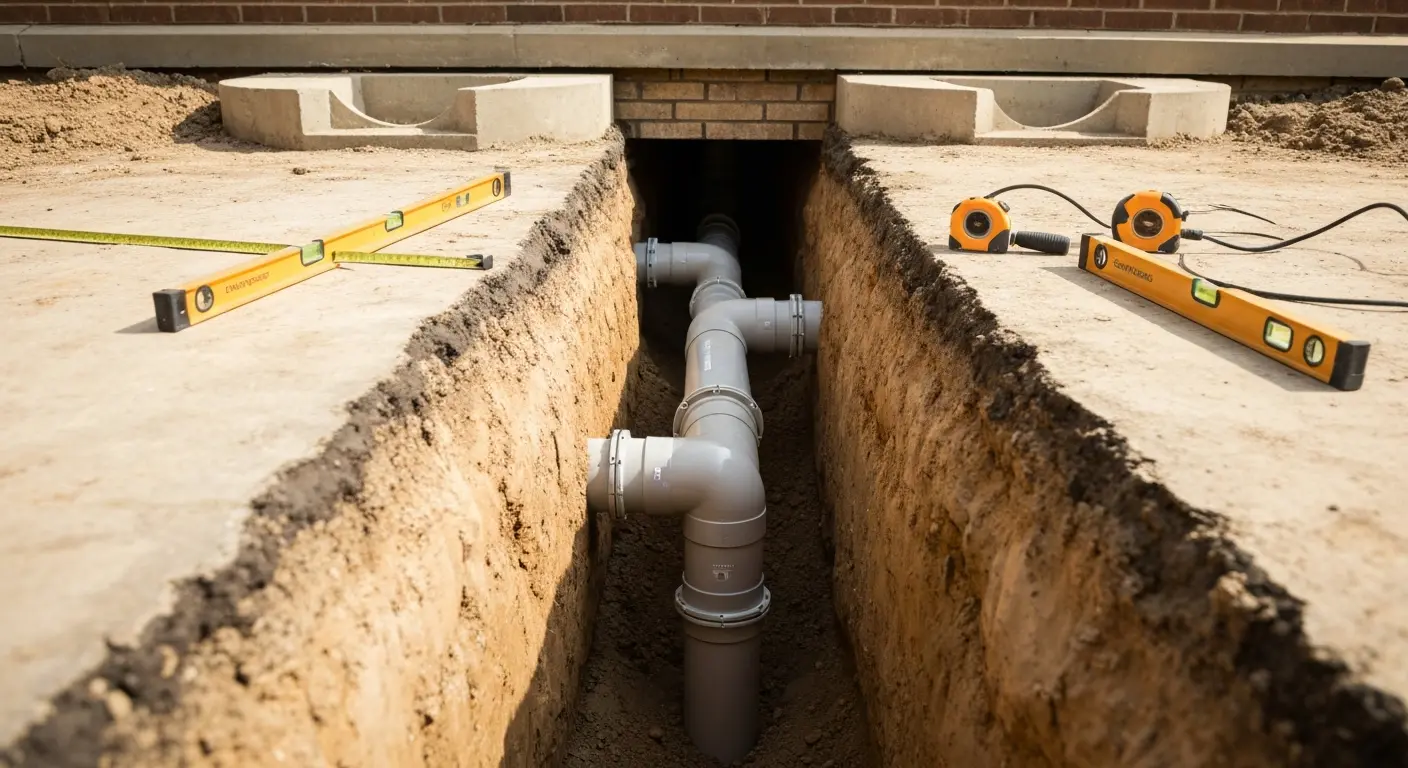
New sewer line installed in Chicago for basement addition with proper slope and city inspection
Full Sewer Line Replacement
When clay pipes deteriorate, cast iron corrodes, or roots repeatedly block flow, replacement is the lasting solution. Chicago homes often face these issues under basement areas or yards where repair costs mount. Modern PVC resists root intrusion and lasts 50+ years.
West Side and South Side neighborhoods commonly deal with century-old clay pipes cracking under freeze-thaw stress. We excavate, remove the old line, and install new pipe with proper bedding and compaction.
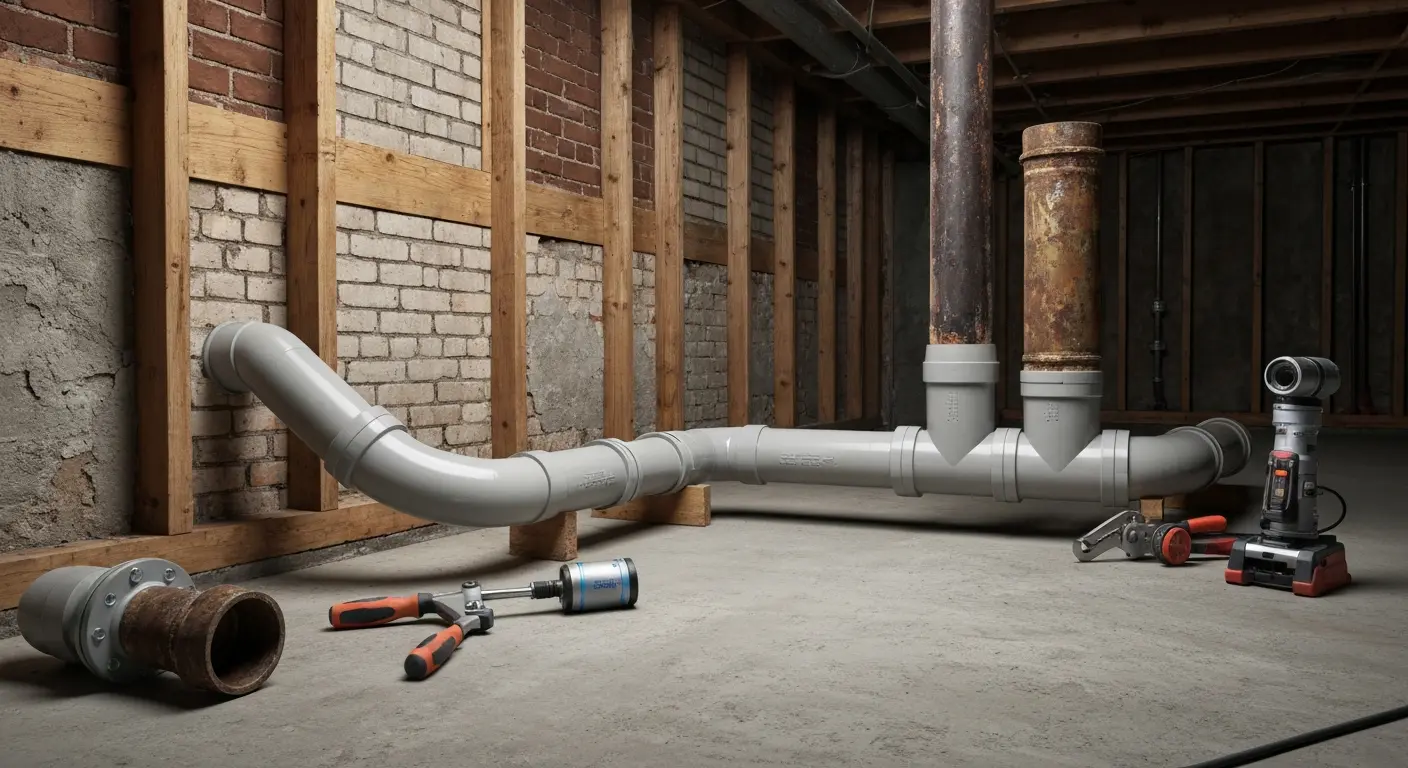
Deteriorated cast iron pipe removed and replaced with Schedule 40 PVC in Chicago
Cast Iron Descaling & Repair
Scale buildup reduces pipe diameter and slows drainage. We use specialized equipment to grind away deposits, restoring flow without replacing the pipe. Cost-effective for pipes that are still structurally sound.
Chicago's many mid-century cast iron systems develop heavy scale over decades. Video inspection reveals buildup patterns; descaling opens the line back up and extends pipe life years beyond what repeated cleaning alone can do.
Descaling works best on cast iron pipes with moderate scale; heavily collapsed or fractured pipes require full replacement for safety.
Sewer Line Locating & Camera Inspection
Don't dig blind. We use electronic line locating to pinpoint underground sewer routes, then video inspect to identify cracks, offsets, root damage, or blockages. High-resolution footage shows exactly what needs repair.
Chicago's dense urban layout means water mains, gas lines, and utility cables live close to sewers. Accurate locating prevents accidental strikes and protects your property. We provide a written report and video file for your records, useful for insurance or future contractors.
Why It Matters
Sewer failures threaten basements, property value, and health.
Prevent Basement Flooding
Chicago's freeze-thaw cycles crack old pipes. Heavy rainfall overwhelms aging sewers. When sewage backs up through basement fixtures, cleanup costs thousands and mold follows. A healthy sewer line prevents disaster.
Neighborhoods with low-lying areas or dense stormwater pressure—like parts of the Northwest Side—face higher flood risk. Professional installation or replacement reduces backup risk from both municipal surges and local line failure.
Protect Property Value
Buyers order sewer scope inspections. Cracked or failing pipes become deal-breakers. Replacing a sewer line before you sell removes uncertainty and supports closing price. A new sewer line is a property investment.
Chicago home buyers expect transparency on sewer conditions, especially in older neighborhoods where clay or Orangeburg pipes are common. Documentation of a new, code-compliant installation builds buyer confidence and shortens sale negotiations.
Serving Chicago and Surrounding Areas
Sewer challenges are citywide; so is our expertise.
Chicago's Aging Infrastructure
Chicago's sewers date back over a century. Clay and cast iron pipes dominate neighborhoods built before 1970. We understand local soil conditions, frost lines, tree root patterns, and permit processes across all Chicago wards.
From Lincoln Park to Hyde Park, from Pilsen to Bucktown, sewer failure is a known risk. We've installed and replaced lines in every neighborhood, working within Chicago's permit system, navigating tight yards, and protecting mature trees and underground utilities.
Mature oak, maple, and elm trees in Chicago yards aggressively seek water in sewer joints. Root-resistant PVC installation prevents future intrusion and saves you from emergency root removal calls.
How to Get Started
One conversation moves you from uncertainty to a clear plan.
Schedule a Free Inspection
Call or fill out our online form to request a sewer evaluation. We'll discuss your symptoms—slow drains, backups, or new construction needs—and schedule a time that works.
During the visit, we'll inspect visible conditions, recommend camera inspection if needed, and explain options in plain terms. No pressure, no surprise fees.
Receive a Detailed Estimate
We'll provide a written proposal outlining scope, materials, Chicago permit requirements, and next steps. No hidden costs. All materials rated for Chicago's climate and soil.
Once you approve, we schedule the work and handle all city permits and inspections. You focus on your life; we focus on your sewer.
What Sewer Line Installation in Chicago Covers
What does sewer line installation involve?
Sewer line installation includes site inspection, utility locating, trenching, laying new pipe (Schedule 40 PVC or cast iron) to proper slope and depth, connecting to the city sewer main, backfilling, compacting, and final city inspection. The process also covers any necessary permits and restoration of your yard or driveway.
What are the signs my sewer line needs replacing?
Common signs include slow drains in multiple fixtures, recurring backups, sewage odors in the yard, patches of unusually lush grass (from sewage seeping), cracks in the foundation, or video inspection showing severe corrosion, root damage, or collapsed sections. Chicago's freeze-thaw cycles accelerate failure in clay and cast iron pipes.
Is a sewer camera inspection necessary before installation?
For replacement work, video inspection tells us exactly what we're dealing with and helps us plan the best approach. For new installations (additions or new construction), inspection confirms the existing line condition and helps us size the new connection correctly.
Can I use my plumbing during sewer line installation?
We'll advise based on the scope. During active excavation and connection work, it's safest to avoid using plumbing. Once the new line is connected and tested, you can use your system normally. We coordinate with you to minimize disruption.
What do Chicago permits require for sewer installation?
Chicago requires permits for any sewer line installation or replacement. The Department of Water Management mandates proper depth (below the frost line), slope for gravity flow, Schedule 40 PVC or approved cast iron, and third-party city inspection at key stages. We handle all paperwork and coordinate inspections.
Frequently Asked Questions
Common questions about sewer line work in Chicago.
Why do Chicago homes have sewer issues more than other cities?
Chicago's aging underground infrastructure, freeze-thaw cycles that crack pipes, and dense urban soil conditions create unique stress. Many homes rely on 100+ year old clay and cast iron pipes. Combined sewer systems (which mix rainwater and sewage) add pressure during heavy storms, common in Chicago.
What pipe material is best for Chicago sewer lines?
Schedule 40 PVC is most common because it resists corrosion, root intrusion, and freeze-thaw stress. Cast iron is approved but requires more maintenance (descaling). We recommend PVC for Chicago's long-term durability and low maintenance.
How deep do sewer lines need to be installed in Chicago?
Chicago's frost line sits approximately 42 inches below grade. Sewer pipes must be buried deeper to avoid freeze damage. Exact depth depends on your property's elevation and city regulations, which we confirm during planning.
Can tree roots damage a newly installed PVC sewer line?
No. Modern PVC pipe is impervious to root penetration. Clay and older cast iron pipes have joints and cracks that roots exploit. PVC's seamless design and smooth interior prevent root entry, a major advantage in Chicago's tree-filled yards.
Who pays for sewer line installation between my property and the street?
You (the homeowner) are responsible for the sewer line from your house to the city main connection at the street or alley. Chicago's Department of Water Management maintains the city main beyond that point. We locate the connection point and ensure proper installation up to the city's responsibility line.
DISCOVER WHAT OUR CUSTOMERS HAVE TO SAY ABOUT US
REVIEWS
proudly serving these areas
Chicago, IL
Downtown Chicago, IL
Loop, IL
River North, IL
Gold Coast, IL
Lincoln Park, IL
Lakeview, IL
Wicker Park, IL
READY TO take the next step?
get a free quote TODAY!
QUICK LINKS
our services
service areas
operating HOURS
Mon: 7:00 am - 6:00 pm
Tue: 7:00 am - 6:00 pm
Wed: 7:00 am - 6:00 pm
Thu: 7:00 am - 6:00 pm
Fri: 7:00 am - 6:00 pm
Sat: 8:00 am - 4:00 pm
Sun: Closed - Closed