
Sewer & Plumbing Services in South Shore, IL
Local Plumbing Expertise
South Shore is a neighborhood where water drainage and sewage backup require serious attention. Our plumber in South Shore, IL specializes in protecting your home from flooding, sewer backups, and the aging clay pipes common in this Lake Michigan-adjacent area. We handle water line repair, leak detection, ejector pump installation and repair, and backwater valve services that keep your basement dry and your plumbing flowing safely.
How We Work
Every plumbing project starts the same way: we listen, diagnose, and explain your options clearly. No surprises, no rush.
Our Process: Step by Step
Inspect & Assess
We examine your pipes, drains, and water lines, then explain what we find in plain language.
Plan & Recommend
We share your options—repair or replace—and help you choose what works for your budget.
Execute & Protect
We install, repair, or replace your systems with care, keeping disruption minimal.
Test & Verify
We test every connection and run the system to confirm everything works as it should.
You'll always know what's happening next—and when.
Our Services
Water Line Repair & Replacement
South Shore homes built decades ago often have original galvanized or clay water lines buried deep under yards and driveways. These pipes crack, corrode, and lose water pressure over time. We locate leaks using modern detection tools and replace aging lines with durable PVC or copper.
- Detect leaks hidden under concrete
- Trenchless or traditional replacement
- Restore full water pressure
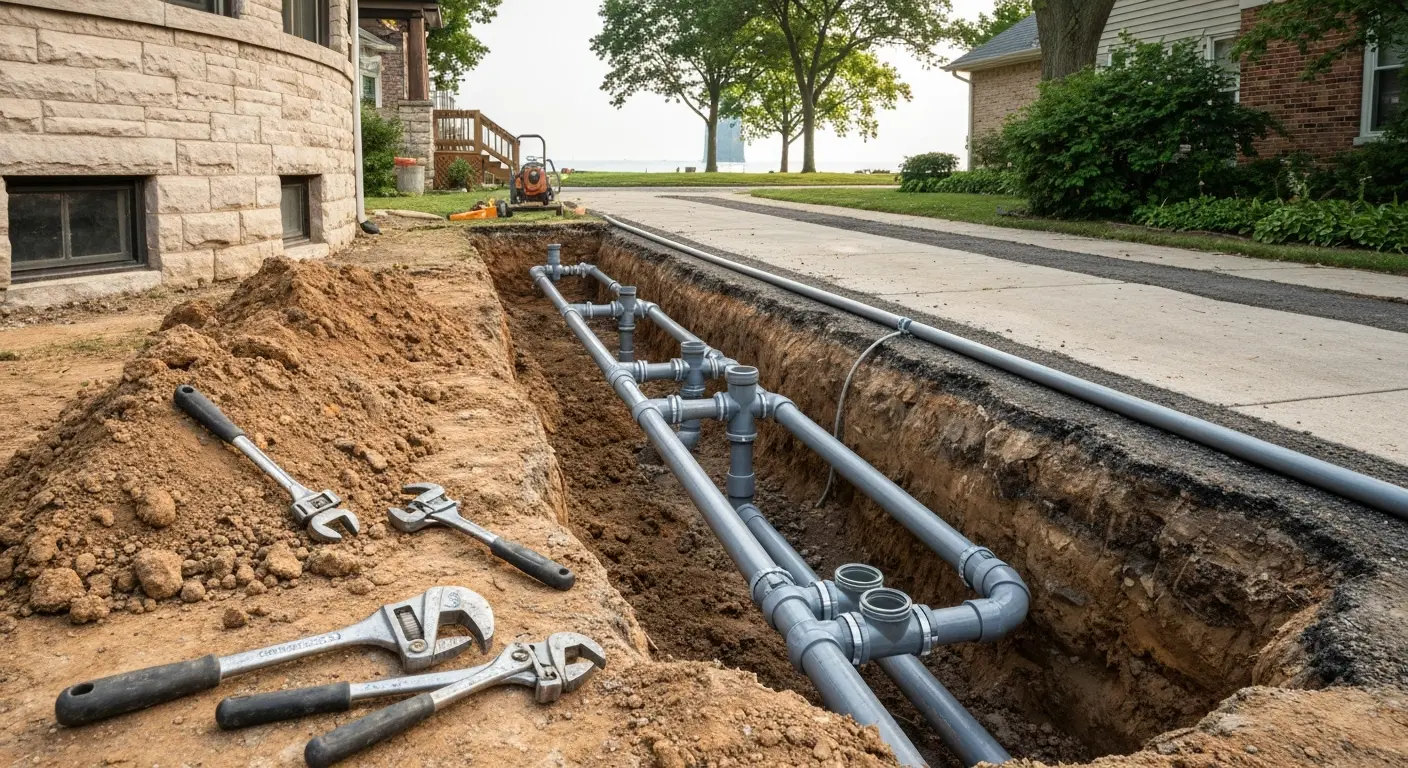
Water main repair under driveways near Lake Shore Drive
Backwater Valve Installation & Repair
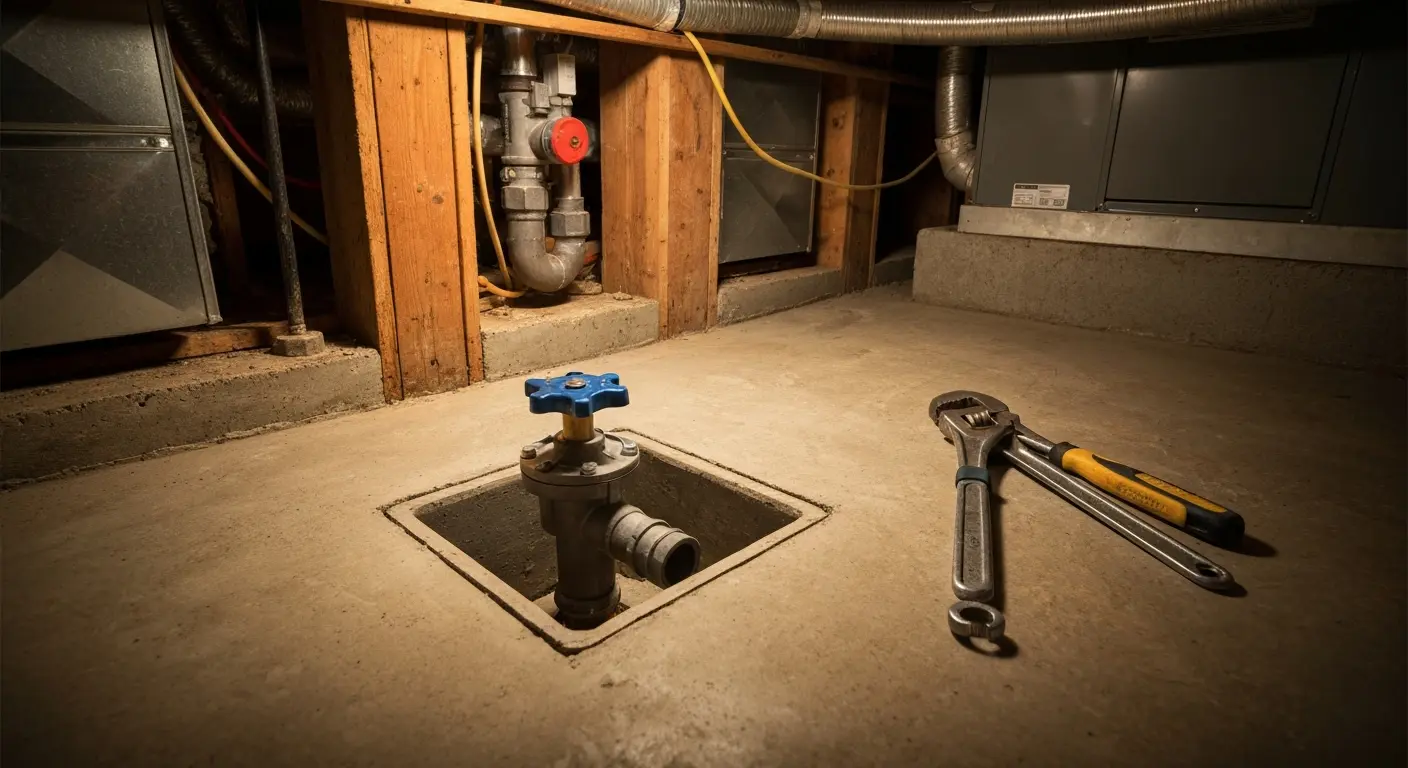
Backwater valve installed in basement floor drain
Heavy Lake Michigan rains and Chicago's combined sewer system create pressure that pushes sewage backward into basements. A backwater valve stops that flow cold. We install and service both interior and exterior valve systems, with inspection cameras to confirm everything seals tight.
- Interior basement floor valves
- Exterior yard vault systems
- Annual testing and maintenance
Leak Detection Services
A slow leak in your water line can waste thousands of gallons and damage your foundation before you notice wet ground. Our leak detection uses thermal imaging and acoustic listening devices to pinpoint breaks in copper, PVC, and galvanized pipes without digging.
- Non-invasive acoustic detection
- Thermal imaging for temperature drops
- Precise location before excavation
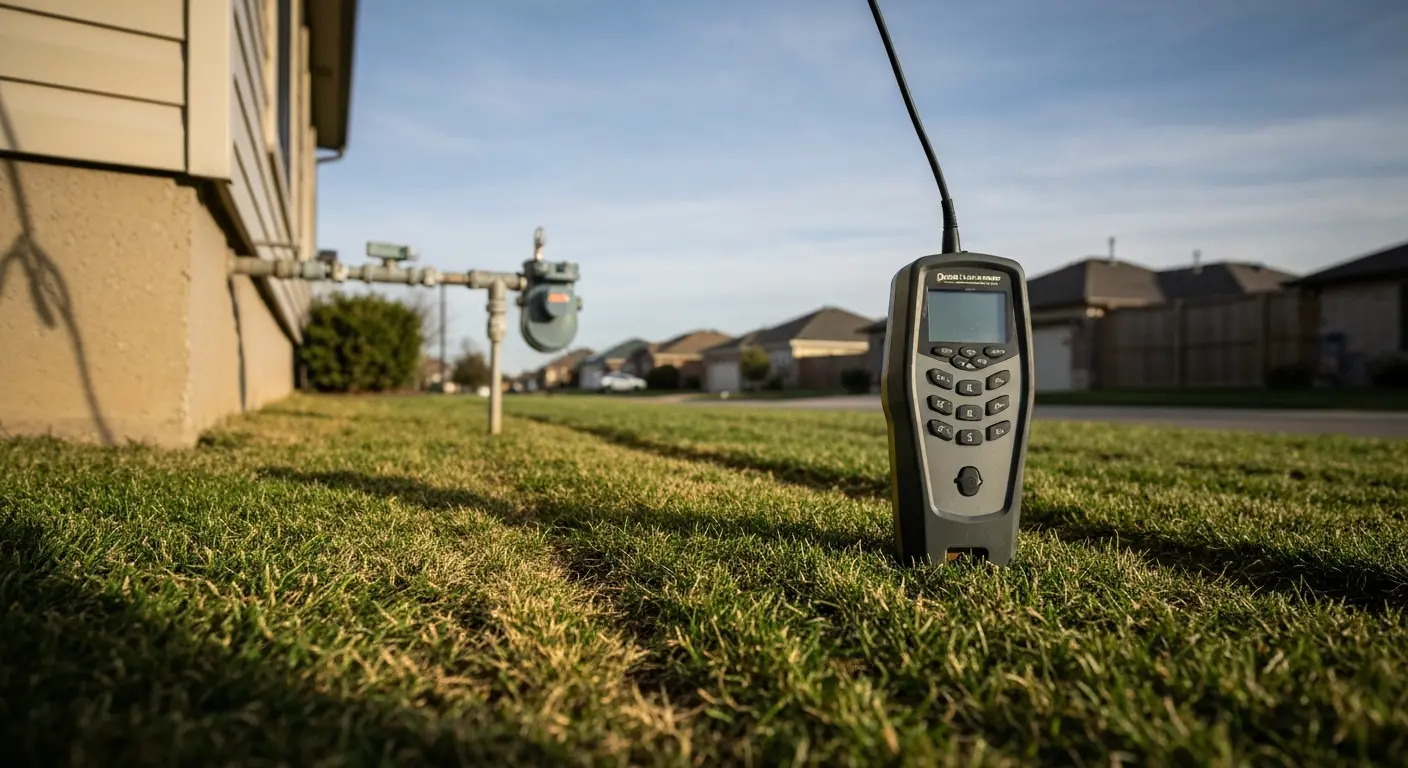
Acoustic detection pinpoints water line leaks under yards
Ejector Pump Installation & Repair
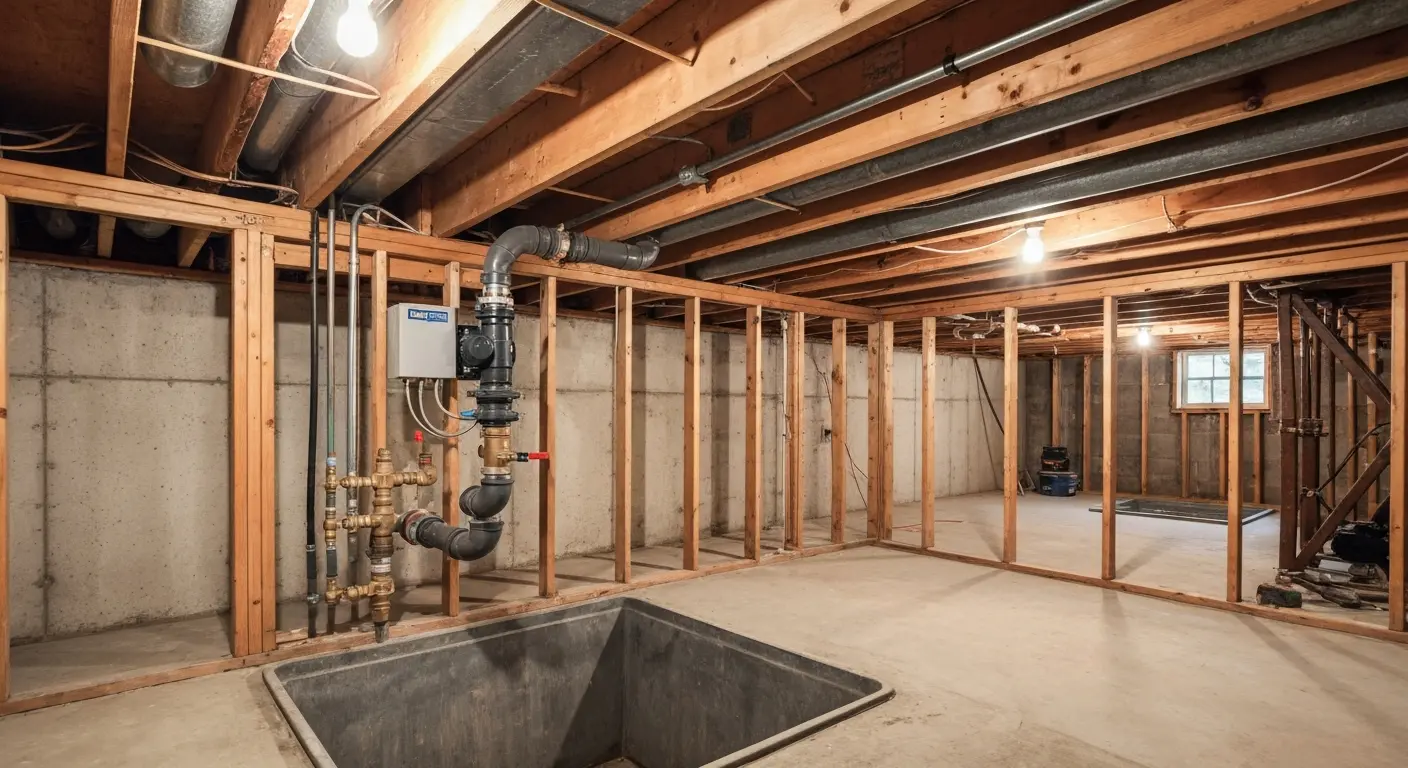
Overhead ejector sump system protecting basement fixtures
Basements below street level can't drain by gravity alone. An ejector pump lifts wastewater from a sump pit up to the main sewer line, protecting all your below-grade fixtures. South Shore homes with finished basements, laundry rooms, or half baths benefit most from this system.
- Submersible or pedestal pumps
- Check valve protection
- Alarm systems for backups
Why Local Plumbing Expertise Matters in South Shore
South Shore sits inches above Lake Michigan with both rainfall and groundwater pressure testing every pipe and basement. Our plumbers understand this neighborhood's specific challenges—clay pipe corrosion, high water table, heavy rain surges, and the need for proper elevation and drainage.
Most homes here were built before 1950, when clay and cast iron were standard. These materials crack and corrode, especially near Lake Shore Drive where salt spray accelerates rust. Tree roots from mature oaks throughout the neighborhood find their way into the tiniest pipe joints, causing slow backups that go unnoticed until a heavy rain arrives.
Chicago's combined sewer system handles both stormwater and sewage in the same pipe. When rain overwhelms the system—which happens regularly during spring thaws and summer storms—raw sewage backs up into basements through floor drains, toilets, and sinks. A backwater valve is not optional here; it's essential.
Why 500+ Projects Matter
We've diagnosed and fixed plumbing problems in nearly every South Shore building type—vintage brick two-flats, apartment conversions, high-rise condos, and older single-family homes. That experience means we know where problems hide and how to prevent the expensive ones.
Serving South Shore and Nearby Areas
We're based locally and serve South Shore residents directly. From the lakefront high-rises near 71st Street to the residential blocks between Rainbow Beach and Jackson Park, we know every corner of this neighborhood and the plumbing challenges it presents.
Getting to Your Home
Parking near Lake Shore Drive can be tight, especially close to the lakefront. Call ahead and let us know your building's access details—whether it's street-side, alley, or underground garage—and we'll plan the most efficient route. For South Shore Drive residents, we arrive ready to work in high-rise buildings, navigating loading zones and building rules without delay.
Frequently Asked Questions
Do I need a backwater valve if I've never had a backup?
Yes. A lack of backups so far doesn't mean your home is protected—it usually means you've been lucky with your rainfall pattern. South Shore's proximity to the lake and high water table create constant risk, especially during spring snowmelt and summer storms. We recommend all below-grade homes have one.
What's the difference between interior and exterior backwater valves?
Interior valves sit in your basement floor drain and are cheaper to install. Exterior valves sit in an underground vault in your yard and offer stronger protection. We help you choose based on your home layout, building type, and budget.
How often should my backwater valve be inspected?
We recommend annual inspections, especially before spring thaw and heavy rain season. During inspection, we test the valve's seal and look for debris or damage that could block it.
What signs suggest my water line is leaking?
Unusually high water bills, soft or sunken spots in your yard, wet basement walls, or a sudden drop in water pressure all point to underground leaks. We use non-invasive detection to confirm before you dig.
Are clay sewer pipes a real problem in South Shore?
Absolutely. Clay pipes from the 1920s–1950s are brittle and crack as the ground shifts. Root intrusion is common. A sewer camera inspection shows exactly what you're dealing with so you can plan repairs before a blockage forces you to.
DISCOVER WHAT OUR CUSTOMERS HAVE TO SAY ABOUT US
REVIEWS
proudly serving these areas
Chicago, IL
Downtown Chicago, IL
Loop, IL
River North, IL
Gold Coast, IL
Lincoln Park, IL
Lakeview, IL
Wicker Park, IL
READY TO take the next step?
get a free quote TODAY!
QUICK LINKS
our services
service areas
operating HOURS
Mon: 7:00 am - 6:00 pm
Tue: 7:00 am - 6:00 pm
Wed: 7:00 am - 6:00 pm
Thu: 7:00 am - 6:00 pm
Fri: 7:00 am - 6:00 pm
Sat: 8:00 am - 4:00 pm
Sun: Closed - Closed