Sewer Line Repair & Replacement Chicago, IL
Professional sewer line repair and replacement in Chicago for homes and businesses.
Local Sewer Line Repair & Replacement Expertise
In Chicago, sewer line repair and replacement keeps homes and businesses protected from backups, odors, and water damage. Slow drains, multiple fixtures acting up at the same time, or wet patches in your yard often signal main line trouble. We diagnose problems with camera inspection, explain your repair or replacement options clearly, and complete the work using proven materials and methods.
How We Work
Our process is straightforward: inspect your line, identify the problem, show you your options, and fix it right.
We Diagnose
We inspect your line with a sewer camera and pinpoint exactly where the damage is and what caused it—roots, corrosion, cracking, or blockage.
We Explain
We lay out your options—spot repair, trenchless lining, or full replacement—with clear trade-offs so you choose the right fit.
We Repair
We handle permits, use quality materials, and complete the work with attention to your property and the Chicago city code.
You'll always know what's happening next—and when.
Our Services
Chicago sewer systems are built on older clay and cast iron pipes. We work with all of them.
Sewer Camera Inspection
A camera inspection shows us the exact condition of your line. We see cracks, root intrusion, offset joints, or blockages without guessing. Chicago homes in Logan Square, Bucktown, and Ravenswood often have clay pipes decades old. A camera run tells us if the pipe is stable or needs work now.
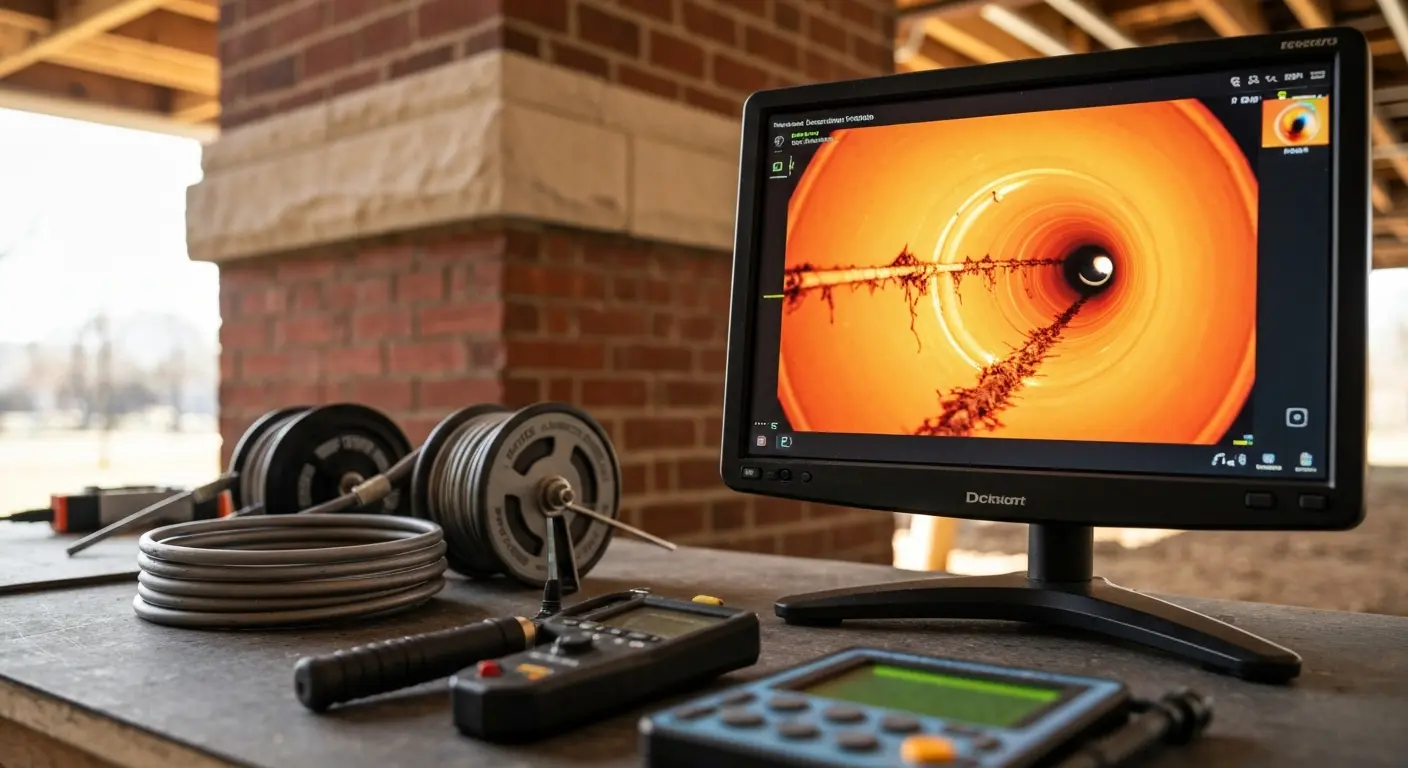
Close-up camera footage reveals root damage in clay pipes common across Chicago neighborhoods.
Tree Root Removal & Control
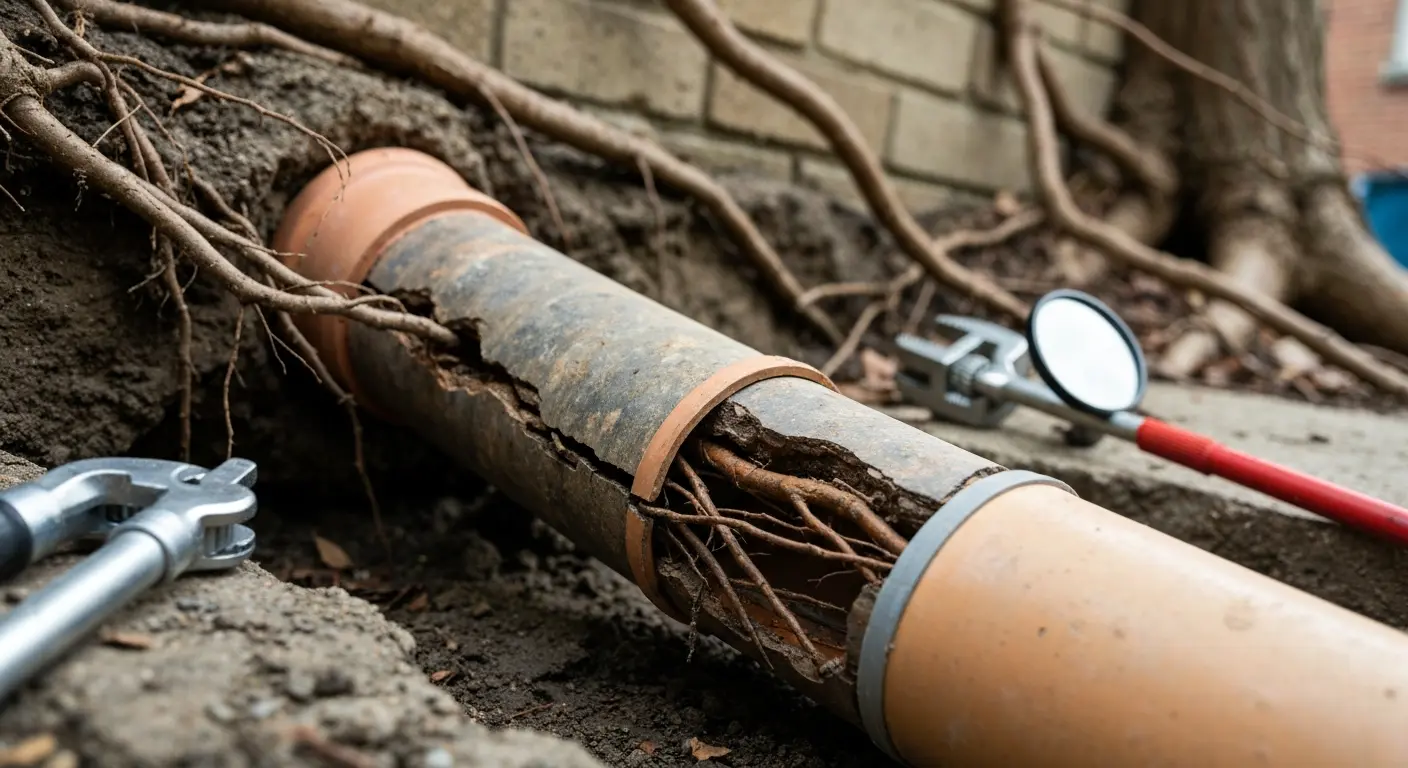
Roots from elm and maple trees in Chicago yards seek water and crack old pipes.
Tree roots are the most common cause of sewer line failure in Chicago. Elms, maples, and oaks seek water. Old clay and cast iron pipes have cracks and weak joints roots exploit. We use hydro jetting to cut roots and flush debris, then coat the interior with epoxy to seal joints where roots re-enter.
Trenchless Sewer Line Repair
Cured-in-place pipe (CIPP) lining rebuilds your sewer line from the inside without digging up your yard. We insert a resin-saturated liner through a clean-out, cure it in place, and create a seamless pipe inside the old one. This protects your trees, landscaping, and driveway.
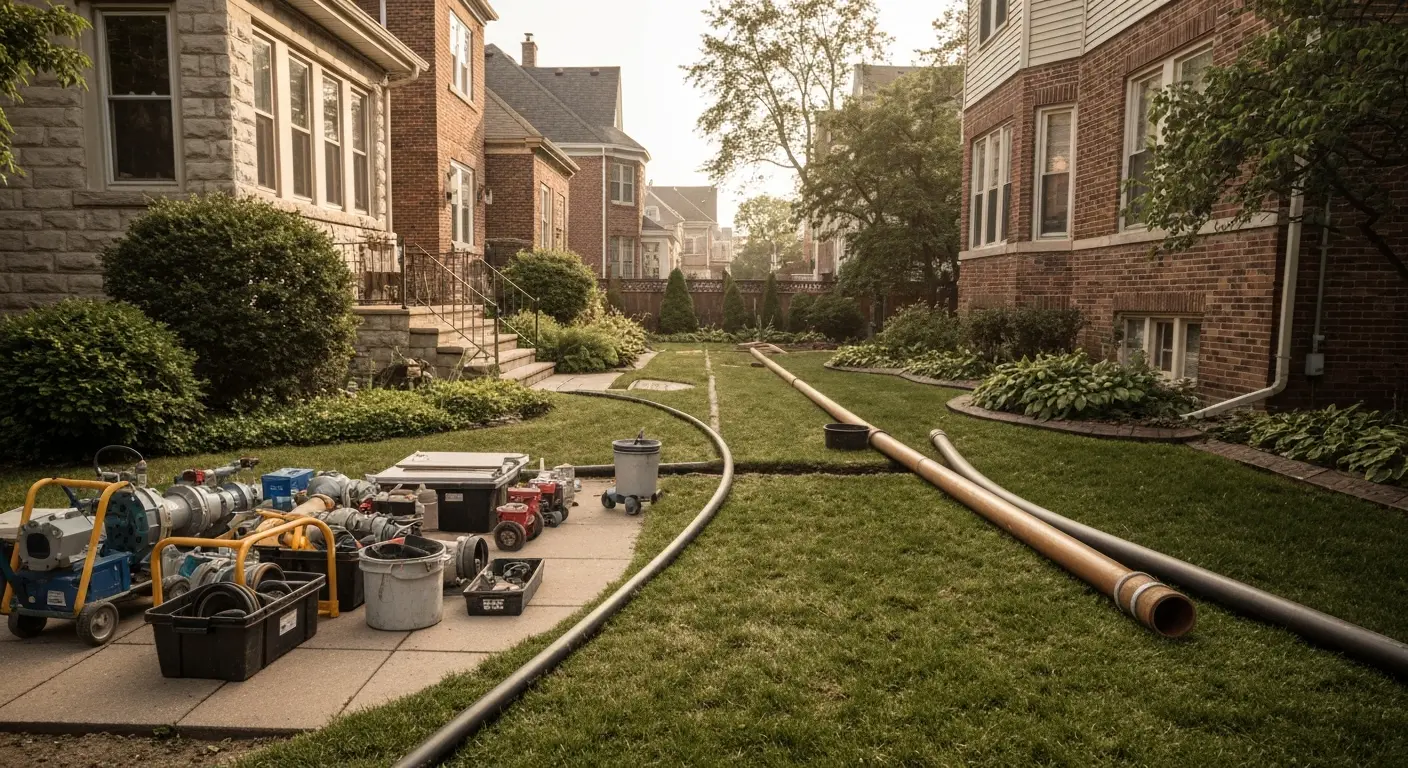
Trenchless lining in Chicago homes preserves yards and avoids street permits.
Sewer Line Replacement
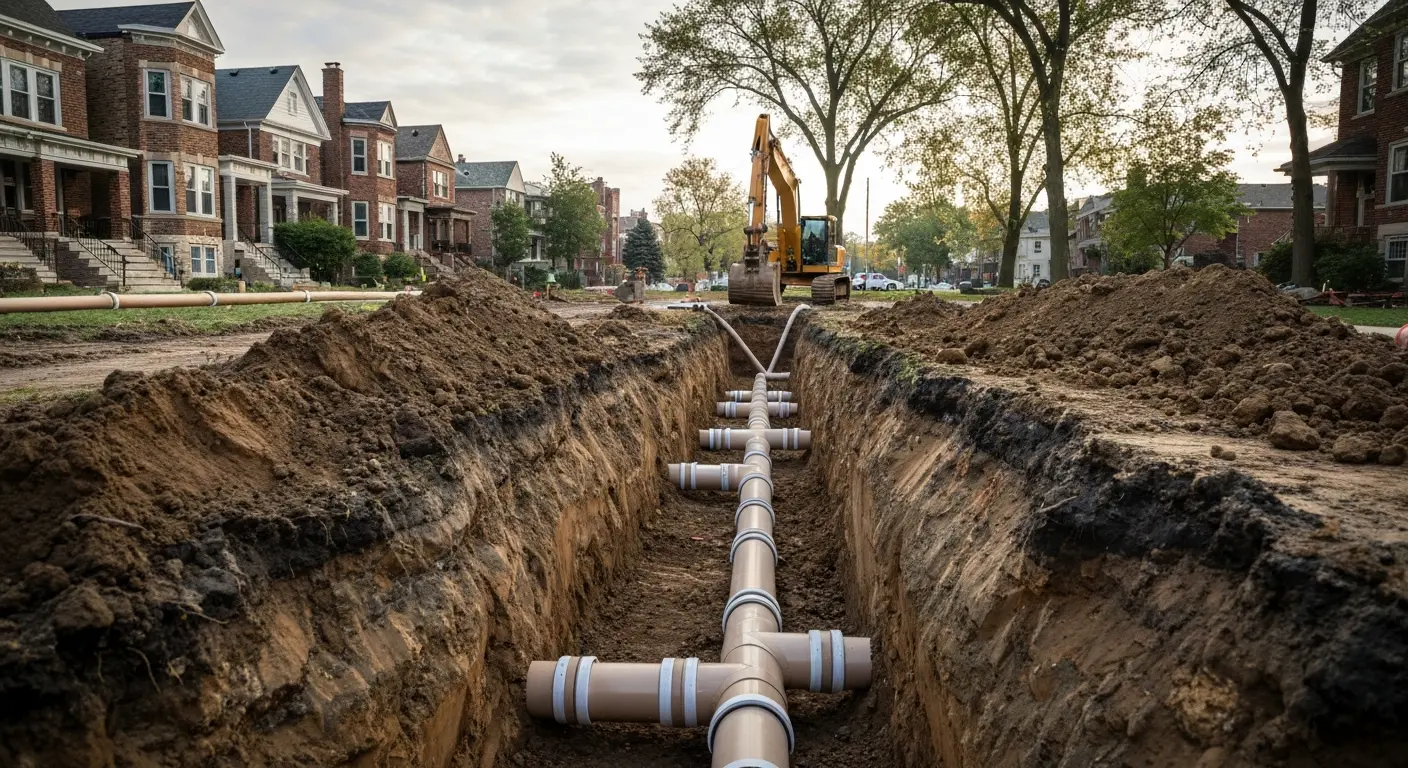
Excavation and replacement with new PVC pipe in Chicago residential areas.
When a pipe has collapsed, extensive corrosion, or repeated failures, replacement is the lasting fix. We excavate the damaged section, pull out the old clay or cast iron, install new PVC, and restore the area. Chicago permits and inspections are handled so you focus on moving forward, not paperwork.
Clay & Cast Iron Pipe Repair
Clay pipes fail at the joints. Cast iron rusts from the inside out. Both are common in Chicago homes built before 1960. Joint separation and corrosion cracks let soil and roots in. We patch small cracks or replace sections of damaged pipe to restore flow and prevent backups.
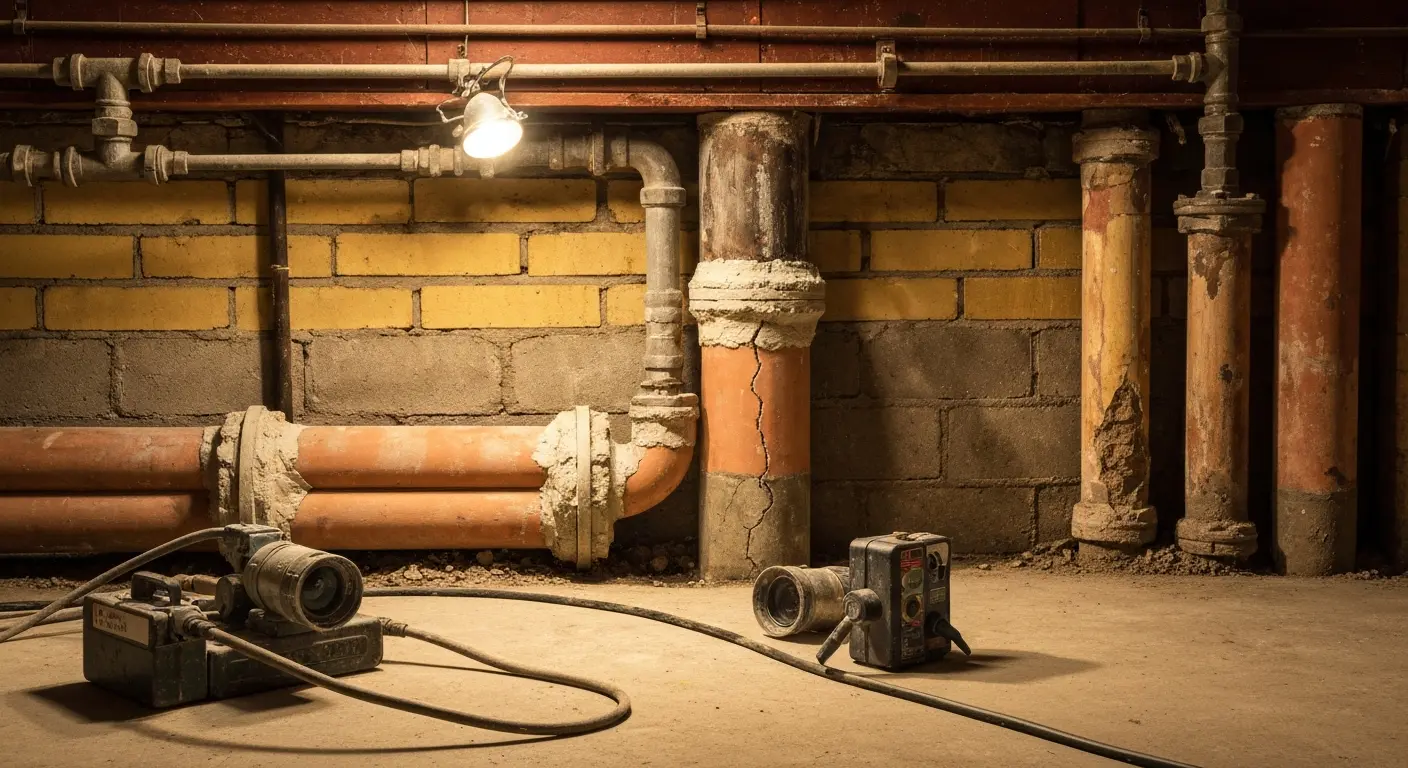
Mortar-sealed clay pipe joints deteriorate over decades in Chicago's freeze-thaw cycle.
Sewer Line Installation & Cleanouts
New construction, property expansions, or added bathrooms need sewer line extensions. We tie new lines into the main system using code-approved materials and slope. We also add or relocate cleanouts to make future maintenance easier and to meet Chicago Building Department standards.
Why It Matters
Your sewer line is the main exit for all water, waste, and drain flow in your home.
What Happens When Lines Fail
When your main line cracks, roots invade, or blockages build, every drain in your home feels it—toilets, sinks, tubs, and showers. You see slow drains, gurgling, sewage odors, or raw sewage backing into your basement. Delayed repairs can lead to foundation damage, contaminated soil, and repair costs that balloon over time.
Ignoring sewer line signs—soggy yard patches, multiple backups, or persistent odors—turns manageable repair into emergency replacement.
Chicago's Aging Infrastructure
Chicago's sewer system was built over a century ago. Homes in neighborhoods like Irving Park, Lincoln Square, and Edgewater still have original vitrified clay pipes. Winter freeze-thaw cycles stress all pipes. Heavy rains can overwhelm the combined sewer system. The longer your original pipe stays in the ground, the more likely it fails.
Proactive inspection and repair stop emergencies before they happen.
Serving Chicago and Surrounding Areas
We know Chicago's neighborhoods and their unique sewer challenges.
North, South & West Side Expertise
Chicago's diverse neighborhoods each face distinct sewer challenges. North Side areas like Ravenswood, Bucktown, and Uptown have mature trees and original clay pipes. South and West Side homes deal with similar aging infrastructure plus high water tables from the city's swampy foundation. We understand freeze-thaw damage, soil movement from Chicago's shifting geology, and local code requirements across all wards.
Permit & Code Compliance
Every sewer repair in Chicago requires a permit from the Department of Buildings. We handle all permitting on your behalf. Our work meets Chicago Building Code standards, Chicago Plumbing Code requirements, and city inspection standards. You avoid penalties, red tape, and failed inspections.
Ready to Protect Your Chicago Home?
Call us for a sewer line camera inspection. We diagnose the problem and explain your options with no pressure. Let's stop slow drains, backups, and odors before they damage your property.
Schedule your inspection today.
Frequently Asked Questions
Common questions about sewer repair in Chicago.
What are the signs my sewer line is damaged?
Multiple drains backing up at the same time, slow drainage throughout your home, gurgling sounds from toilets or drains, sewage odors inside or outside, wet or sunken patches in your yard, or visible cracks in basement pipes all point to main line trouble.
Why does Chicago have so many sewer problems?
Chicago's pipes are over a century old, made of clay and cast iron that degrade naturally. Winter freeze-thaw cycles crack pipes. The city's high water table and mature tree root systems accelerate damage. Older infrastructure simply wears out.
Is trenchless repair really better than traditional digging?
Trenchless repair preserves your landscaping, driveway, and trees. It's ideal for cracks, root damage, and corrosion when the pipe structure is stable. Full replacement may be needed if the pipe has collapsed or offset joints. The right method depends on what the camera shows.
Do I need a permit for sewer line repair in Chicago?
Yes. All sewer repairs and replacements in Chicago require a Department of Buildings permit. We handle permitting, inspections, and code compliance so you don't have to navigate the process alone.
How can I prevent sewer line problems?
Have your line inspected every few years, especially if your home is older. Avoid pouring grease down drains. Don't plant large trees directly over sewer lines. If tree roots are active, periodic hydro jetting keeps them under control. Early detection stops small problems from becoming emergencies.
DISCOVER WHAT OUR CUSTOMERS HAVE TO SAY ABOUT US
REVIEWS
proudly serving these areas
Chicago, IL
Downtown Chicago, IL
Loop, IL
River North, IL
Gold Coast, IL
Lincoln Park, IL
Lakeview, IL
Wicker Park, IL
READY TO take the next step?
get a free quote TODAY!
QUICK LINKS
our services
service areas
operating HOURS
Mon: 7:00 am - 6:00 pm
Tue: 7:00 am - 6:00 pm
Wed: 7:00 am - 6:00 pm
Thu: 7:00 am - 6:00 pm
Fri: 7:00 am - 6:00 pm
Sat: 8:00 am - 4:00 pm
Sun: Closed - Closed