
Sewer Line Locating Chicago, IL
Professional sewer line locating in Chicago using advanced camera and GPR technology.
Local Sewer Line Locating Expertise
In Chicago, sewer line locating prevents costly mistakes. Whether planning a renovation or diagnosing drainage problems, knowing your line's exact location—depth, direction, and condition—protects your property. Sewer line locating in Chicago uses advanced technology to map underground pipes without extensive digging.
How We Work
We use precision technology to identify your sewer line accurately and safely, protecting your landscape while delivering the clear answers you need.
Step-by-Step Location Process
Initial Assessment
We review your property records and pinpoint where your sewer line likely begins. This foundation helps us plan the most effective approach for your Chicago location.
Advanced Locating
Waterproof cameras show the inside of your line in real time. Inserted through cleanouts or vents, they reveal condition, direction, and depth. Some have transmitters that mark their exact location below ground. No guessing.
Documentation
You receive a detailed report mapping your line—depth, material, and condition. Use it for renovations, repairs, or future reference. Clear answers in your hands.
You'll always know what's happening next—and when.
Our Services
Comprehensive sewer line locating and inspection tailored to Chicago's aging clay and cast-iron infrastructure.
Sewer Camera Inspection & Line Mapping
Camera inspection is the gold standard for sewer locating. A push camera with an integrated sonde provides visual confirmation and a traceable signal from inside the pipe. This allows the sewer line to be mapped accurately from above ground. This method removes guesswork by showing what is actually inside the pipe. In Chicago, where clay pipe that is between 85 and 140 years old runs beneath neighborhoods like Lincoln Park and Andersonville, this visual record matters.
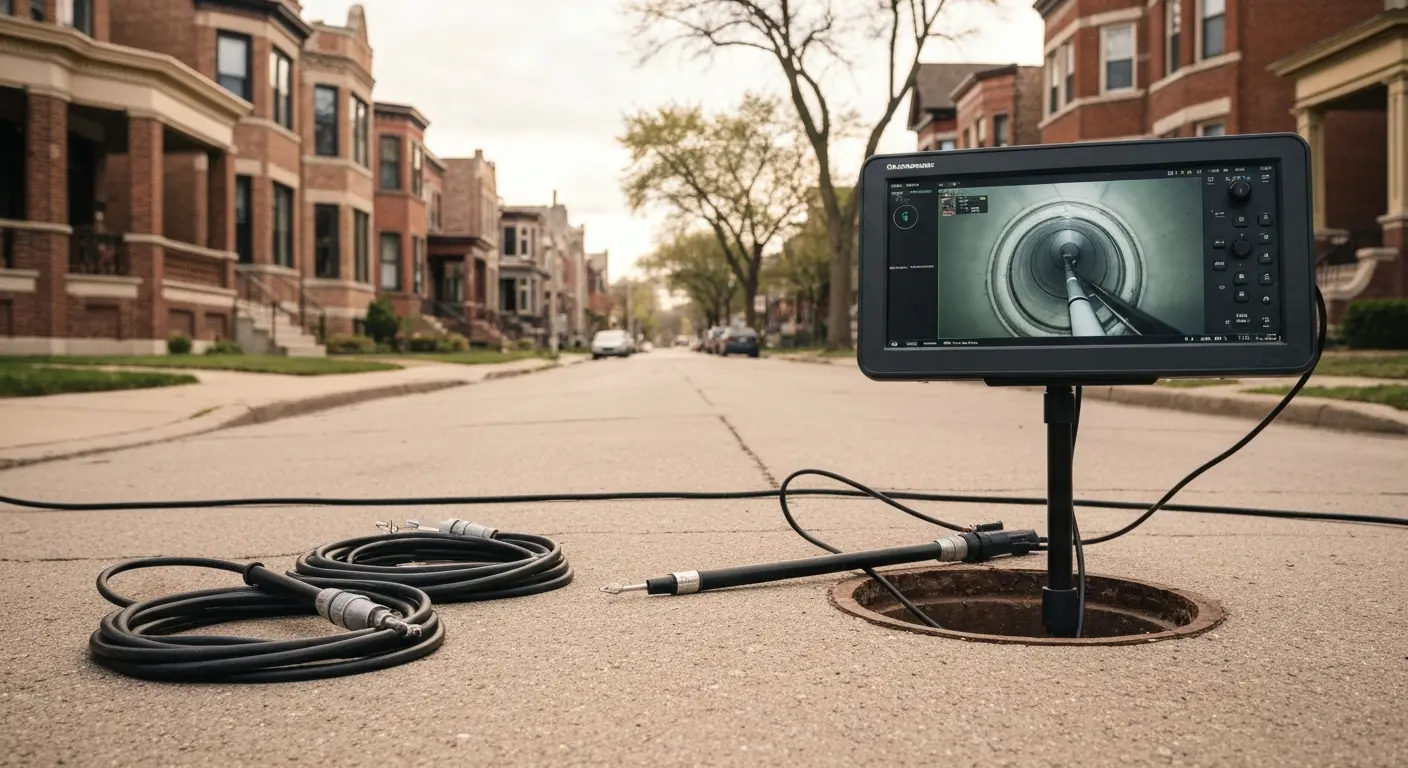
Sewer camera inspection in Lincoln Park neighborhood, documenting pipe condition and exact route.
Ground Penetrating Radar (GPR) Locating
Think of GPR as a detective that looks underground without digging. This technology sends radar signals into the ground and picks up reflections from different materials. Whether it's pipes, rocks, or even sewer lines, GPR can detect them by analyzing these signals. Ideal for non-metallic clay pipes common in Chicago's older residential areas.
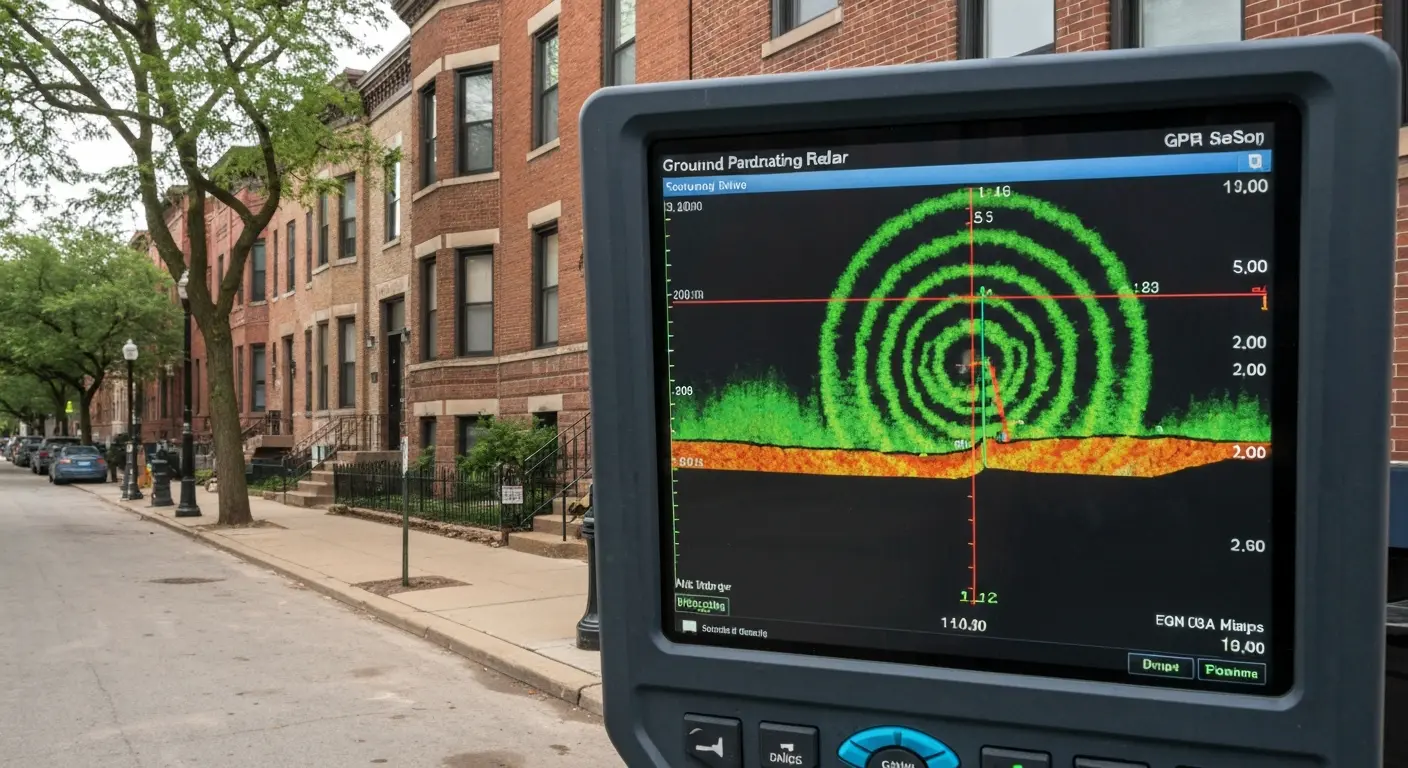
GPR scan revealing underground sewer line layout in Logan Square, minimal surface disruption.
Property Record Research & Cleanout Location
Before digging or locating, we check your home's blueprints, building permits, and survey maps. Review blueprints, survey maps, or building permits. Look for a capped pipe near your foundation. Contact your city – Request utility maps from your local municipality. This foundational work saves time and prevents false starts, especially in dense Chicago neighborhoods like Wicker Park.
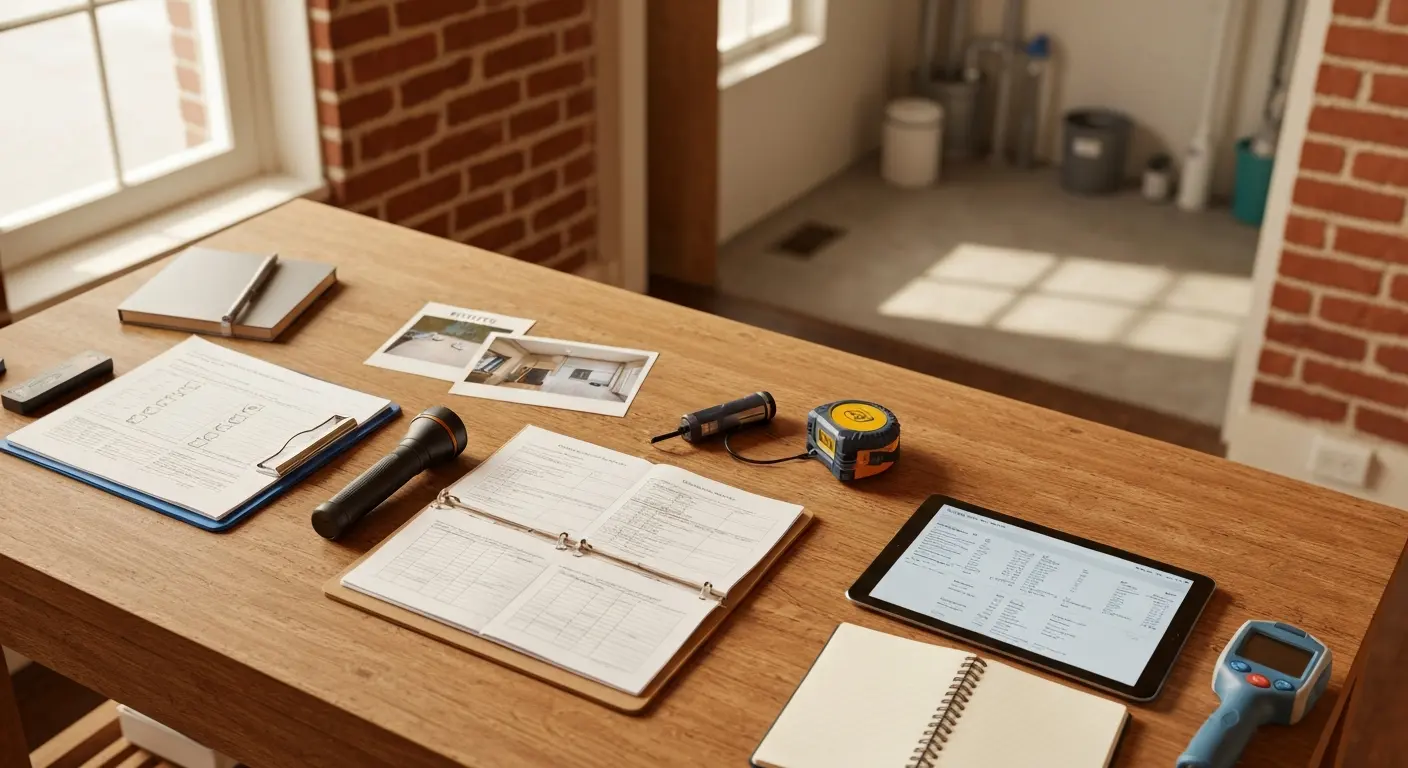
Property record review and cleanout identification in a Pilsen-area home.
Why It Matters
Chicago's infrastructure demands precision. Locating prevents damage, saves money, and protects your home.
Protect Your Property During Excavation
Random digging can harm your property's landscape and might even damage other utility lines. With precise septic line locating, you can avoid unnecessary disruptions. One misdirected shovel during a landscaping project in Edgewater or a pool install costs thousands in repairs.
Sewer line locating maps the exact route before any ground work begins. Your contractor gets a clear guide. Your foundation stays intact. Your budget stays on track.
Diagnose Hidden Sewer Problems Early
The most expensive sewer issues — collapsed lines, root intrusion, bellied pipes — happen inside the line, several feet below the yard. A house can show zero symptoms during a 30-minute walkthrough and still have a $15,000 problem waiting underground.
Cracked pipes, root intrusion, bellies, and corrosion all show up clearly on camera. Catching them before closing means you can negotiate repairs into the deal, or walk away from a bad one. For Chicago homebuyers and current owners, this early detection prevents catastrophic expense.
Chicago's Aging Infrastructure Challenge
Most of Chicago's residential sewer infrastructure was installed between 1880 and 1940. Beneath the tree-lined streets of Lincoln Square and Andersonville, beneath the greystone two-flats of Logan Square and the six-flats of Edgewater, beneath the vintage brownstones of Lincoln Park and the bungalow belts of Beverly and Mount Greenwood, there is clay pipe that is between 85 and 140 years old.
Clay pipe fails at the seams. Those joints — originally mortared or fitted with compression seals — degrade over decades. Tree roots find the gaps with what can only be described as professional dedication. Locating your line tells you exactly what you're dealing with.
Serving Chicago and Surrounding Areas
We serve Chicago's North Side, South Side, and West Side neighborhoods, plus established suburbs. We understand Chicago's unique sewer infrastructure—clay pipes, cast iron, combined sewer challenges, and tight lot constraints.
Whether you're in Lincoln Park, Lakeview, Hyde Park, Wicker Park, Pilsen, Bridgeport, or Andersonville, we know how Chicago's sewer system works and what problems to look for. Most Chicago homes built before the 1980s have original clay or cast-iron infrastructure that needs professional assessment.
Featured Snippet
What is sewer line locating?
Sewer line locating is the process of identifying the exact path and depth of your home's underground wastewater pipes. Whether you're planning a landscaping project, experiencing drainage problems, or preparing for a home renovation, knowing where your sewer line runs can save you from costly mistakes.
- Uses advanced cameras and radar to map underground pipes
- Prevents damage during excavation and construction
- Identifies cracks, blockages, and aging pipe conditions
Request a sewer line locate before you dig, renovate, or buy in Chicago.
Frequently Asked Questions
Common questions about sewer line locating in Chicago.
Why do I need sewer line locating before digging?
If you are planning major excavation for a pool, home addition, or extensive landscaping, hitting a line can cause flooding and costly repairs. Locating prevents damage and protects your property investment.
What technology do you use to locate sewer lines?
We use sewer cameras with integrated transmitters (sondes) and ground-penetrating radar (GPR). GPR detects both metallic and non-metallic objects. It works in various soil types and environments. This dual approach finds clay, cast iron, and plastic pipes.
Is sewer line locating necessary for home inspection in Chicago?
A camera inspection answers that definitively. For homes built before 1980 with original clay or cast-iron pipes, a professional sewer locating is wise before purchase. Early detection prevents expensive surprises.
How deep are Chicago's sewer lines typically buried?
Sewer lines especially tend to be buried deeper than other utilities. Depth varies by location and age. Camera inspection and radar reveal the exact depth of your line.
Can sewer line locating identify damage and tree root intrusion?
Yes. Tree root intrusion: Roots are drawn to the moisture inside sewer pipes. They find their way in through small cracks or pipe joints, then grow until they partially or fully block the line. Camera inspection documents this clearly, showing exactly where damage occurs.
DISCOVER WHAT OUR CUSTOMERS HAVE TO SAY ABOUT US
REVIEWS
proudly serving these areas
Chicago, IL
Downtown Chicago, IL
Loop, IL
River North, IL
Gold Coast, IL
Lincoln Park, IL
Lakeview, IL
Wicker Park, IL
READY TO take the next step?
get a free quote TODAY!
QUICK LINKS
our services
service areas
operating HOURS
Mon: 7:00 am - 6:00 pm
Tue: 7:00 am - 6:00 pm
Wed: 7:00 am - 6:00 pm
Thu: 7:00 am - 6:00 pm
Fri: 7:00 am - 6:00 pm
Sat: 8:00 am - 4:00 pm
Sun: Closed - Closed